THIS WEBSITE, THE BRIGHTON BRANCH OF A.S.L.E.&F.


 HAS NOW BEEN MOVED TO A NEW SITE CALLED


IGNITING THE FLAMING OF UNITY


http://ignitingtheflameofunity.yolasite.com/1872.php


PLEASE CLICK ON THE IMAGE BELOW TO TRANSFER TO THIS NEW SITE


CLICK ON THE ABOVE IMAGE TO TAKE YOU 

TO THE NEW UPDATED COMBINED AND WEBSITE


IGNITING THE FLAME OF UNITY WEBSITE


THIS WEBSITE COMBINES THE FOLLOWING WEBSITES 

THE BRIGHTON A.S.L.E.&F.,  THE BRIGHTON MOTIVE POWER DEPOTS 

& THE SUSSEX MOTIVE POWER WEBSITES


WHICH EXPLAINS THE EVOLUTION OF THE FOOTPLATE GRADES AND THE HISTORY OF THEIR TRADE UNIONS AND THE STRUGGLES TO IMPROVE THEIR WORKING LIVES


 I do not want art for a few, any more than education for a few, or freedom for a few
William Morris (1834-1896)


CHANGING TIMES ON THE BRIGHTON RAILWAY


DAVID SEARLE COLLECTION
ACCURATE INFORMATION about the relationships between employer and employee during the mid - Victorian years before 
the growth of the trade unions is difficult to discover, especially in any form other than very general terms. This lack of easily 
available detail has forced many a modern historian to make recourse to statistics to illustrate their work, a regrettable 
practice giving rise to all sorts of usually incorrect interpretations. Records on a local level are even more difficult to find so, 
when a batch of accounts dating from the 1870s and covering a series of industrial negotiations on the London Brighton and 
South Coast Railway was recently discovered, it seemed an ideal opportunity to reconstruct events by allowing the accounts to 
speak for themselves, adding only where necessary a historical background by way of explanation.
England's financial crisis of 1866, brought about mainly by the failure of the Overend and Gurney bank that May, spelt the 
beginning of the end for the old L.B.S.C. Company. The inevitable finally came in 1867 when the Railway's strained financial 
position pushed it to the very edge of bankruptcy; the board of directors was forced to declare that no ordinary share dividend 
would be paid that year. The situation had been worsened by the board's mishandling in March of a dispute with engine 
drivers over working hours. This resulted in an unnecessary two day strike that forced the Company to seek Board of Trade 

arbitration. Disenchanted with the directors' financial incompetence and out-moded policies, the shareholders finally ousted 
them all. Within a year the entire board had been swept away, replaced by people more in touch with the reality of the 
changing times and who were to guide the Company through the next 30 years or so. Samuel Laing MP, Chairman of the 
L.B.S.C. from 1848-55, was brought back and a new Company Secretary, Allen Sarle, was installed as his assistant. Between 
them, they began to lay the foundations for the gradual recovery of the Company, a task greatly assisted over the next few 
years by other notable staff changes that were to alter radically the relationship between the Company and its employees. In 
1869, George Hawkins, Traffic Manager since May 1850, retired and was replaced by John Peake Knight from the South 
Eastern Railway. Later that same year, the Company's Locomotive Superintendent, the much maligned John Chester Craven, 
tendered his resignation for the third time and it was finally accepted. His replacement was William Stroudley who took office 
from 1 February 1870. With the help of a few talented assistants and some influential friends, he was to change the L.B.S.C.
image for ever. 
By 1869, the country's economic climate began to change and a revival of trade heralded a period of renewed prosperity 
between 1870 – 73 for the majority of the working population. 
This change, coupled with the social reforms introduced after the return to power, in the election of November 1868 of a 
Liberal government under William Gladstone, produced the favourable conditions under which England's working population 
once again felt able to press for some improvements in their wages and working conditions. The focus of their expectations 
crystallised into a campaign to reduce the period of continuous labour to nine hours per day. The ‘nine hours movement', as it 
came to be known popularly, first grew to prominence among engineering workers in the northeast. It quickly gathered 
support, spreading eventually throughout the country and its significance was not lost on the L.B.S.C.'s senior management. 
By 1870, the movement had reached London and, when signs of impending agitation began to appear among those employed 
at the L.B.S.C.'s New Cross Works (always the Company's most militant group of employees) both Locomotive Superintendent 
and General Manager (J. P. Knight's title had been changed from 1 January 1870) realised the inevitability of the movement. 
Any opposition to it would be clearly futile and quickly lead to a serious confrontation with the men just at the time when the 
Company was experiencing the beginnings of an upturn in its fortunes. As such a confrontation would be disastrous for the 
Company's recovery, both men expressed their fears to the L.B.S.C.'s board in the autumn of 1871. Immediately, they received 
support from the Chairman, Samuel Laing, who appears to have regarded the nine hours movement with a certain degree of 
enlightened sympathy. Acting on the advice of their managers, and guided by the Chairman, the board sensibly decided to act 
without waiting to be approached. On Saturday, 11 November 1871, they announced his long-felt view that rune hours should 
be that they would concede a decrease in the recognised working man's day so that he men's working hours. The news was 
well might be allowed a fair amount of recreation received, such that the men decided to hold and a chance to enjoy his 
domestic life. He public demonstration as an expression of went on to give some indication of his views their approval.
DAVID SEARLE COLLECTION
The afternoon of 18 November saw an estimated 1,400 Brighton men, together with a contingent of 300 or so from New Cross, 
assembled in the New England Road yard. Members of the Works' negotiating committee with their chairman, James Webley, 
at the head led the way, followed. by the Brighton Railway Works band. Next came the men from the various departments, 
each shop with its flags and banners headed by the respective foremen, followed at the rear by the Brighton Town Band. The 
procession wound its way out of the yard up the hill via Chatham Place to Dyke Road where a stop was called outside Balnaiti 
House, the home of William Stroudley, the man whom the men considered to be mainly responsible for the introduction the of 
shorter working hours. In response to cheers from the street, Stroudley appeared at a window to acknowledge their greetings. 
The procession then moved on to Montpelier Road, down North. Street and finally along Marine Parade to No 1 Eastern 
Terrace, the residence of the Brighton Company's Chairman. Upon their arrival, Mr Laing came outside to meet them, an act 
that was enthusiastically received. A deputation came forward to be presented to him by Mr Trangmar, Chairman of the 
Brighton Railway Provident Society. At its head there was Mr Webley of the turners' department, who presented Mr Laing with 
an illuminated address expressing the men's appreciation and their hope that the friendly relations so produced might 
continue. A similar address was presented on behalf of the New Cross contingent by a Mr Pawley. In reply, Laing thanked the 
men for their good wishes, but declined to accept all the credit, saying that Messrs Stroudley and Knight, together with his 
fellow directors, all deserved their fair share of praise. He continued by expressing his long-felt view that nine hours should 
be recognised working man's day so that he be allowed a fair amount of recreation and a chance to enjoy his domestic life. He 
went on to give some indication of his views regarding the question of wages in the future and that this was a separate matter 
from the nine hours movement. On their journey back to the New England Road yard. Once more they stopped, this time 
outside the St Peter's Terrace home of their former Locomotive Superintendent, John Chester Craven where the bands played 
“Auld Lang Syne.” Since leaving the Company's employment, Craven had entered local politics and was now a member of the 
Brighton Town Council. His reaction to this 'salute' does not appear to be recorded! The marchers then returned to Works 
yard but, before dispersing to their homes, they passed a vote of thanks to all who ·had helped with the organisation of the 
demonstration.
At the Company's annual general meeting held at the London Bridge terminus on Wednesday, 24 January 1872, the Chairman 
informed the shareholders that the cost of the concession over the nine hours movement would be some £3,000 annually


CLICK ON THE ABOVE IMAGE TO TAKE YOU 

TO THE NEW UPDATED COMBINED AND WEBSITE


IGNITING THE FLAME OF UNITY WEBSITE


THIS WEBSITE COMBINES THE FOLLOWING WEBSITES 

THE BRIGHTON A.S.L.E.&F.,  THE BRIGHTON MOTIVE POWER DEPOTS 

& THE SUSSEX MOTIVE POWER WEBSITES


WHICH EXPLAINS THE EVOLUTION OF THE FOOTPLATE GRADES AND THE HISTORY OF THEIR TRADE UNIONS AND THE STRUGGLES TO IMPROVE THEIR WORKING LIVES


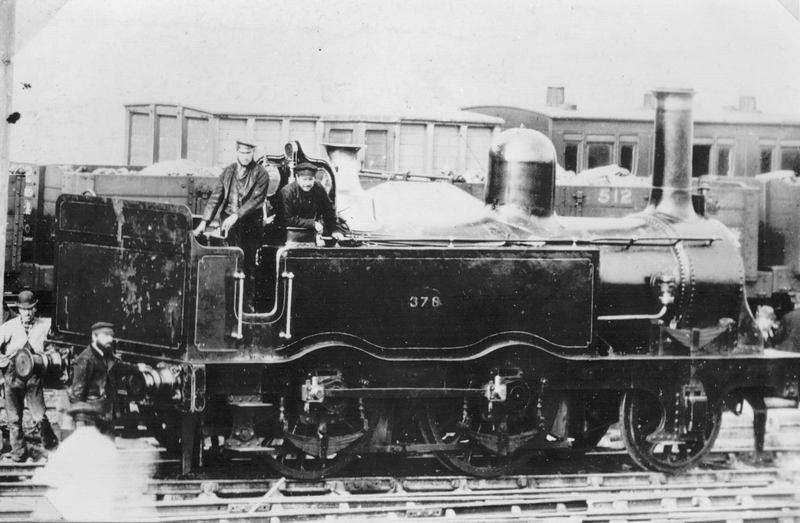
PHOTOGRAPHER UNKNOWN
 The changes in the economy during this period also brought in their wake altered social attitudes that enabled the Gladstone 
government to introduce a number of reforms, including the passing of the Trades Union Act of 1871 which paved the way for 
the establishment of the first lastingly successful railway trades union. The Amalgamated Society of Railway Servants, formed 
the very same year as the Act, established a branch in Brighton in 1872. It should be added that there was none of the 
acrimonious opposition that greeted the establishment of similar branches on other railways.
Although the A.S.R.S. played no recorded part in what follows, the significance of this milestone in social history should I feel 
not go unrecorded for it illustrated the difference between old and new L.B.S.C. boards towards the Railway's employees.
During the winter of 1871/72, the L.B.S.C.'s drivers and fireman' presented their Locomotive Superintendent with a memorial 
whose object was to enlist his support for a reduction in their hours of work, coupled with an increase in the rate of pay. In 
February, Stroudley issued his reply making his position clear when he stated that, in view of the concession granted only two 
months before, he felt unable to' appeal to the directors for any further increases on behalf of his men. He went on to say that 
he was of the opinion that 'the present rates for both engine drivers and firemen were so good and just that it would be a bad 
policy to alter them.
To the petitioners this was naturally an unsatisfactory reply, so they exercised their right to send a deputation to petition the 
directors and Mr Stroudley was requested to arrange such a meeting.
The month of June 1872 also saw the board in receipt of a petition from the deputation of enginemen who pressed their claim 
for hours worked and wages earned. After some considerable debate, the board agreed to raise the men's wages and to revise 
their conditions of work, instructing Mr Stroudley to prepare a printed circular to be given to each man. Issued on ?Thursday, 
2 July 1872, it read as follows:
I have the pleasure to inform you that the board of directors, after carefully considering the memorial from the 
drivers and firemen for a reduction in the number of hours constituting a day's work and the modification of the 
same, have agreed that the following liberal scale shall come into force on and after July 1st with the distinct 
understanding that it must be looked upon as the final adjustment of all questions appertaining to the conditions of 
your service. The modified scale is as follows: 

Time: All drivers and firemen to be paid at the rate of 60 hours per week, time to be taken when the men came on 
duty (by order) and when they leave duty. 

Overtime: Overtime to be calculated at the rate of 10 hours per day. 
Sunday work: One and a half days to be paid for Sunday work, irrespective of hours, except in cases where two sets 
of men are employed on one engine, when only one day will be paid to each man. 
Shed days: Main line men who run 750 miles or upwards in five days shall have a shed day once a week, or as near 
to that as can be arranged. 

Signed, Yours truly, 
William Stroudley 


Later in the month, L.B.S.C.'s Chairman addressed the shareholders' half-yearly meeting and had the following to say 
regarding this latest wage settlement.
Railway companies (he said) had no great difficulty in dealing with the labour question because it was found that for every 
man who thought he was hardly used, there were three others to take his place. But they had met their men fairly, and after 
careful consideration had agreed to a certain advance in the rate of wages that was considered equitable. The policy of the 
board had been to take time by the forelock and meet their men with timely consideration and the result had been the retention 
of a happy, contented body of men in the service of the Company.
In January 1873, Samuel Laing revealed at the annual general meeting that, out of a total increase' in working expenses of 
£43,760 incurred during the previous half year, the new wage settlements and reduced hours of work accounted for £5,760 of 
the total sum. This appears to have been the final settlement in the series as no further accounts from this period of change on 
the L.B.S.C. have been found. The attitude of the board and its senior managers towards their employees is clearly illustrated 
by these events and would appear to be generally in advance of those adopted at this time by some of the country's other 
major railway companies. This attitude held the L.B.S.C. in good stead. It was nearly 10 years before any further agitation 
began among its workforce.
This has been adapted from the original article that appeared in the Railway World Magazine in December 1984. 
The article was written by Michael Cruttenden.
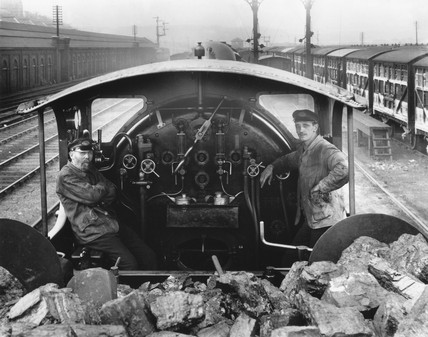
William Stroudley was ever sympathy with his men, who looked up to him as a friend and regarded him as a hero who made 
their interests his own. In labour relations and in industrial psychology, he was far ahead of his time. Stroudley made himself 
known individually to almost every driver and frequently rode on the footplate, even when he travelled as a passenger 
Stroudley would make appoint to stop and speak to the loco-men during his journey. The high regard for Stroudley was 
showed at his funeral procession on the 24th December 1889, when 1,600 men from the various departments of Brighton 
Locomotive Works marched four a breast.


ALAN PENTNEY COLLECTION
R.M.T. COLLECTION


PHOTOGRAPHER UNKNOWN


CLICK ON THE ABOVE IMAGE TO TAKE YOU 

TO THE NEW UPDATED COMBINED AND WEBSITE


IGNITING THE FLAME OF UNITY WEBSITE


THIS WEBSITE COMBINES THE FOLLOWING WEBSITES 

THE BRIGHTON A.S.L.E.&F.,  THE BRIGHTON MOTIVE POWER DEPOTS 

& THE SUSSEX MOTIVE POWER WEBSITES


WHICH EXPLAINS THE EVOLUTION OF THE FOOTPLATE GRADES AND THE HISTORY OF THEIR TRADE UNIONS AND THE STRUGGLES TO IMPROVE THEIR WORKING LIVES

 L.B. & S.C.R. Footplate Rates Of Pay 1870- 1874


Drivers 

Year Rate Per Day

1st Year 5/-

2nd Year 5/6

3rd Year 6/-

4th and 5th Year 6/6

6th Year 7/-

Firemen

Year Rate Per Day

1st Year 3/-

2nd & 3rd 3/6

4th Year 3/9

5th Year 4/-

Cleaners

Age Rate Per Day

16 1/4

17 1/8

18 2/-

19 2/4

Bar Boys 8?


In 1872 a Superannuation Fund was established for higher grades of staff, which was extended to become a pension fund for 

all staff in 1899.

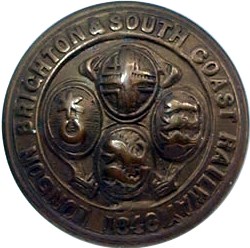
An L.B.S.C.R. Engineman's button


 STORIES FROM THE SHOVEL

extracted from RTCS book on locomotives of the LBSCR


A FOOTPLATE IN TWO HALVES
On 3rd February, 1873 a 'Craven 'Chicherster" Class Singles' loco No. 173 was at the head of the 4.10. p.m. Hastings express 
loaded to 10 carriages came to grief when approaching Berwick station at speed. Without warning the iron pin attaching the 
engine and tender broke, and the train ran on to Polegate before it could before it could be stopped. Fortunately Driver 
Robinson kept his head, and, realised that the train and tender were chasing him, opened the regulator and kept his distance, 
giving vocal warning on the whistle. No one was hurt, and by much ingenuity on the part of the crew a fresh pin was 
improvised, and the journey completed with a loss of minutes. Recoupling the various pipes as well as replacing the pin in the 
dark and cold of a February night says much for the spirit of the old Brighton line.


PULLMAN CARS ON THE BRIGHTON LINE
The first Pullman car ran on the London - Brighton service on Monday 1st November, 1875. This parlor car was built in the 
U.S.A. and assembled in 1875 at Derby by the Pullman Palace Car Company, a branch of the American organisation formed 
in 1867 by George Mortimer Pullman. This car was attached to a train of six new first class coached which left Victoria at 
10.45 a.m. and ran non-stop to Brighton in 70 mins., a timing on the London - Brighton service which had been established as 
early as April, 1858. The Pullman supplementary charge was 1s. 6d. over he first class express fare.
The first all-Pullman train on the L.B.S.C.R. was introduced in 1881,and consisted of four Pullman cars. Although described 
as a new train, the vehicles do not appear to have been new, but were probably refurbished and partly rebuilt for the service. 
The Pullman car Beatrice was used as an experimentally between Victoria and Brighton in October of that year as the first 
railway carriage to be lighted by electricity. This was eleven months before a similar experiment in the U.S.A. As a result, the 
new train was electrically lighted.
On Thursday 1st December, 1881, a special inaugural trip was made to Brighton via Dorking, Horsham & Shoreham and 
back by the direct route. The was hauled by a Stroudley “G” class 2-2-2 No.329, ’Stephenson’. On Monday 5th December, 
1881, the “Pullman Limited Express” was placed in regular service. On weekdays it left Victoria at 10 a.m. and 3.50 p.m., 
returning from Brighton at 1.20 p.m. and 5.45 p.m. 
The first Sunday train ran on the 11th December. It left Victoria at 12.30 p.m. and returned from Brighton at 9.30 p.m. and 
consisted only of Pullman cars. 
The all-Pullman train was poorly patronised, and in less than two months the Sunday service was withdrawn. The weekly 
service was continued, but, from Friday 1st December, 1882, ordinary first class coaches were attached and the train ceased 
to be all-Pullman, The name “Pullman Limited Express” remained in the timetable until 1887, when the words “Fast train” 
were substituted for “Express”. In 1882 a British company called the Pullman Co. Ltd. was formed, but under American 
control.
On Sunday 2nd October, 1898, a train consisting exclusively of Pullman cars was once again put on, and, in contrast to 1881, 
was well patronised. The new train left Victoria at 11 a.m. and returned from Brighton at 9 p.m. It ran only on Sundays, and 
not at all during July, August and September, by reason of the difficulty of securing a clear road in the holiday months. During 
June the train left Brighton an hour later. Like its predecessor, it was at first called “ he Pullman Limited Express.” Early in 
1899, the title “Brighton Limited” began to be used, but not to the exclusion of the earlier one, which retained until 1908, 
when it was superseded. From the outset this train was the first to be timed to run from Victoria to Brighton in n hour, and to 
do the same on the return journey.  


SPEEDOMETERS ON THE FOOTPLATE
Extracted and adapted from the N.R.M. website
Judging the speed of the train was done purely through the driver’s skill, using his route knowledge and mileposts next to the track. This is despite the fact that speed recording equipment had existed for decades. 
On the London, Brighton and South Coast Railway Class G locomotive, designed by William Stroudley. The first of Stroudley’s speed indicators was fitted to locomotive Grosvenor, built in 1874. 13 more locomotives were ordered with some modifications, the last being delivered in 1881.  The drawings below shows Stroudley’s patented speed indicator as fitted to locomotive No. 350. Southbourne.


The brass scale is logarithmic 
and each line is marked with a 
speed  starting at 5 m.p.h. with 
a maximum of 55 m.p.h. 
underneath the top line.
Stroudley’s speed indicator was a novel design. A fan was driven from the axle of the rear trailing wheel by a belt.  This pumped air into a gauge glass on the footplate. Higher speeds would force a ball sat in the glass upwards and this could be read against a gauge next to the glass. This being a successful design, which then led to every Brighton engine having a speed indicator in their cab. 

It’s nearly impossible to say how many accidents or lives could have been saved if the speed indicator had been fitted on the Brighton lines. There seem to no obvious reason why Stroudley and the L.B.S.C.R. introduced them. There was no other pre-grouping railway company that decided to use them. The London & South Western Railway, tried a few speed recorders around 1909, but still much later than the L.B.S.C.R.


Evidence given of excessive hours worked by Enginemen in 1877

Accidents, due mainly to the negligence and greed of the railway companies, were commonplace. In 1874-6, for example, 
there nearly four thousand people killed on the railway and over sixteen thousand injured. Two thousand of those killed and 
ten thousand of the injured were railway servants. The railway companies took no responsibilities for the injuries and deaths 
caused by their own rapacity.
The Royal Commission on Railway Accidents of 1877 revealed that drivers were accustomed to working four or five hours 
overtime a day, sometimes ten hours, this was usually unpaid. An eighteen or nineteen hour day was not unusual. 
A Driver Weston gave evidence before the Royal Commission that on one occasion:
“I had been on hours sixteen hours a day in  succession and on the third day I went on the engine at 7.30 in the morning and 
left it at 11 or 12 at night. I took my meals and everything on the engine. I never left the engine. I complained to my foreman 
and told him that I found difficulty in keeping my eyes open. Upon the third day I told him that I could not hold myself 
responsible if anything occurred to the engine or the passengers and that it was unfair to force us to do it. He reported this is 
to Mr Thomas Wheatley, Locomotive Superintendent, London North Western (Southern Division) . He called me up and said, 
‘Weston unless you retract those words, I will dismiss you’. I said, ‘Mr Wheatley, you have the power to dismiss me but I 
cannot retract what I said’. ” In fact Weston was given the option of being reduced to a branch line or being dismissed. He 
left.
On the Brighton Line Mr Woodhead gave the case of a Engineman who “made 89 hours in 6 Days without a Sunday, and 
another who worked 16 hours, and 14 hours, and 20 ¼ hours, and 23 ¼ hours, and 16 ½ hours in his week”
*It is not known what the loco shed, Driver Weston was located at.


PHOTOGRAPHER UNKNOWN
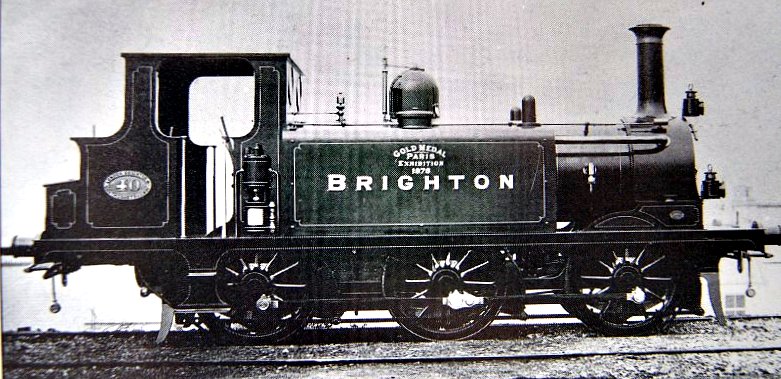
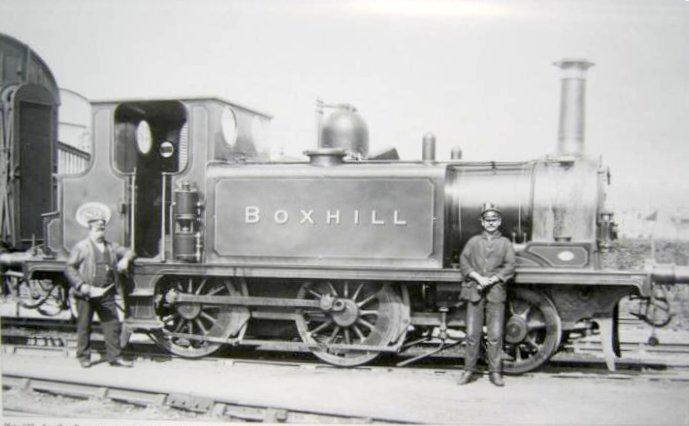
William Stroudley Award winning Terrier Tank engine, nick-named by their drivers as “Rooters"
Shortly after construction, No.40 Brighton was chosen by William Stroudley to represent the L.B.S.C.R. at the Paris Exhibition of 1878, and won a gold medal for workmanship. The journey to Paris was made under her own steam, except for the trip across the Channel, where the engine was shipped across on the L.B.S.C.R. steamer Honfluer, the run from Dieppe to Paris, arranged to persuade the Chemins de Fer de l Ouest that the company’s boat trains that met the LB&SCR ferries from Newhaven could make better time to the capital, Brighton maintained a speed of nearly fifty m.p.h., previously unheard of on that line.
What we are trying to find out if this engine was driven to Paris by a Enginemen from the L.B.S.C.R.?


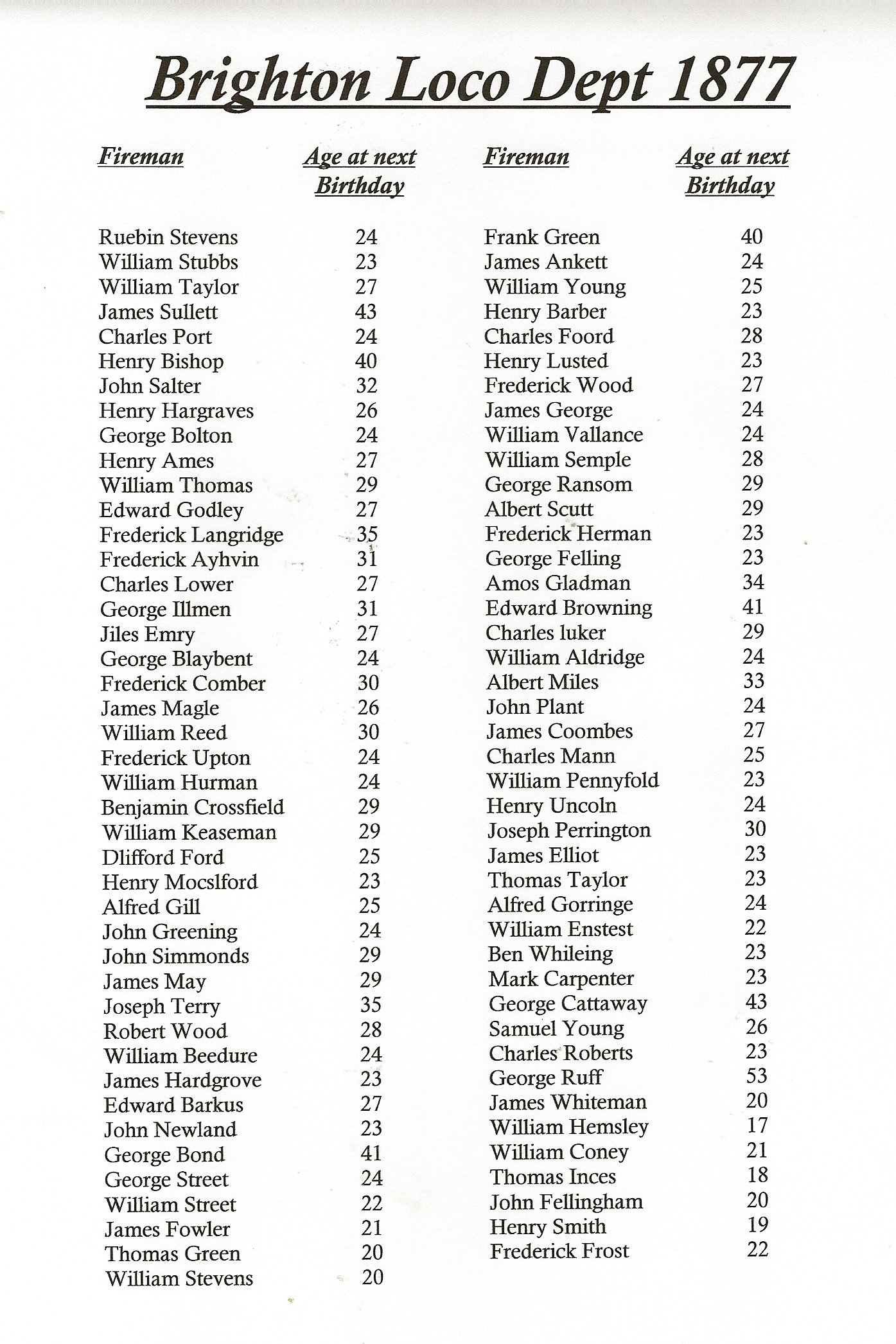
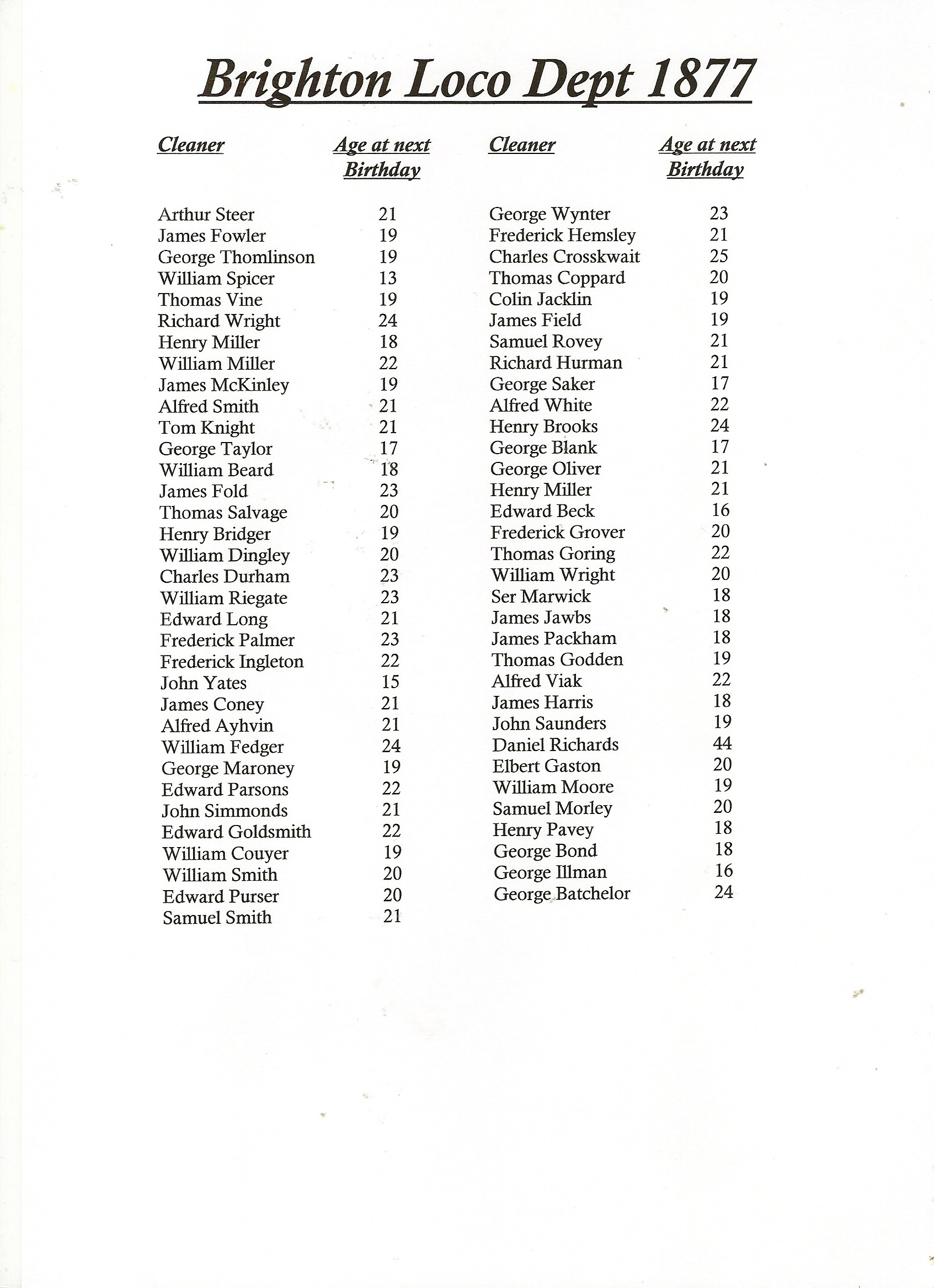
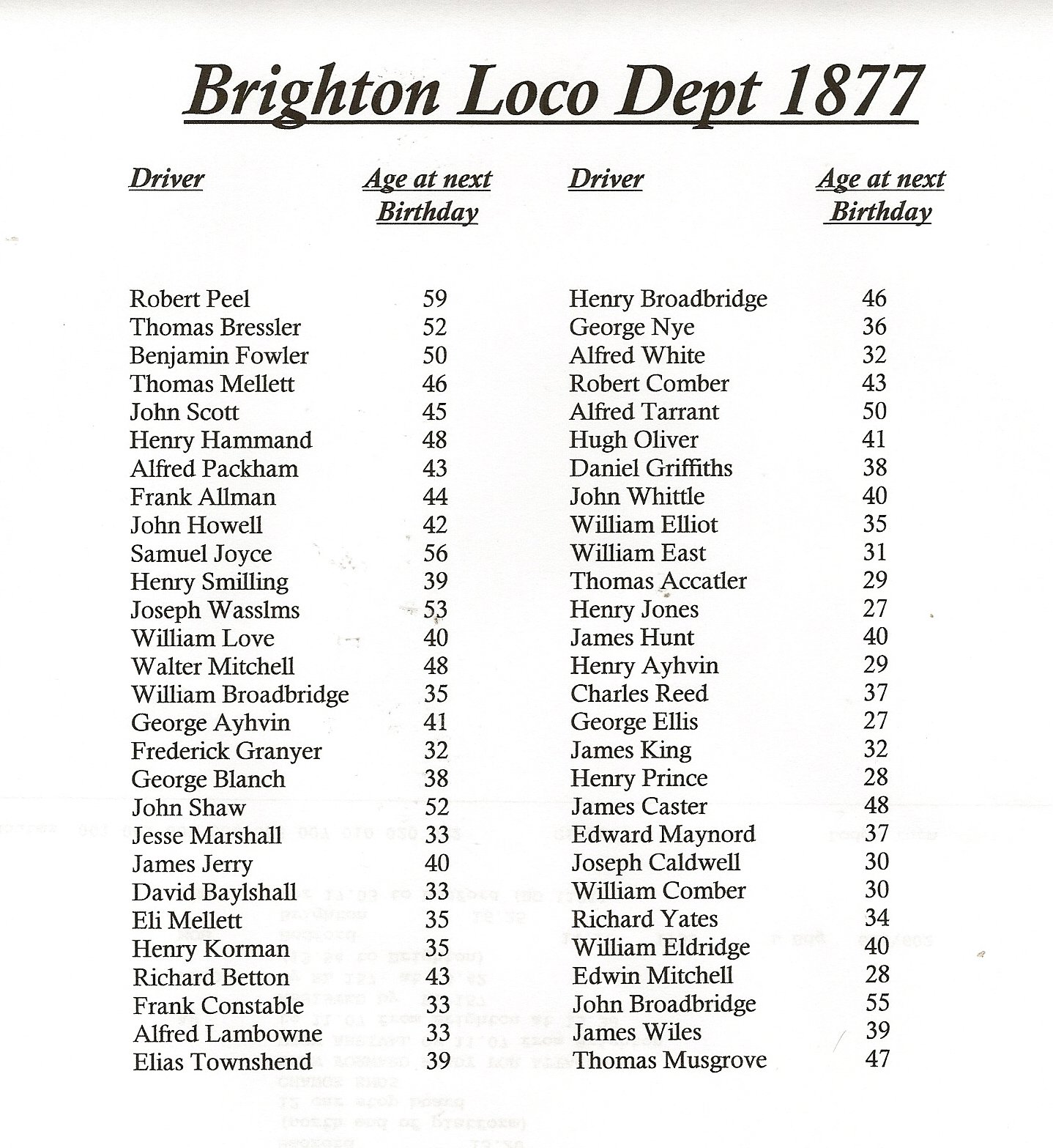
 LIST OF BRIGHTON ENGINEMEN 1877

Above in the photo gallery is a reproduced list of all the engine men that where employed at Brighton Locomotive 
Department in 1877. It is not know if this is list was compiled in seniority order or not. However, the list does clearly indicates 
the difference in the ages of both drivers & fireman at that period of time.
There appears to be more Fireman than Drivers. It is not sure if some of the Fireman where Passed Men who carried out 
driving duties when they where required to do so.


THE FELLINGHAM’S OF BRIGHTON LOCO


E.J. BEDFORD COLLECTION

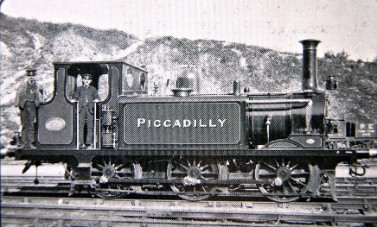
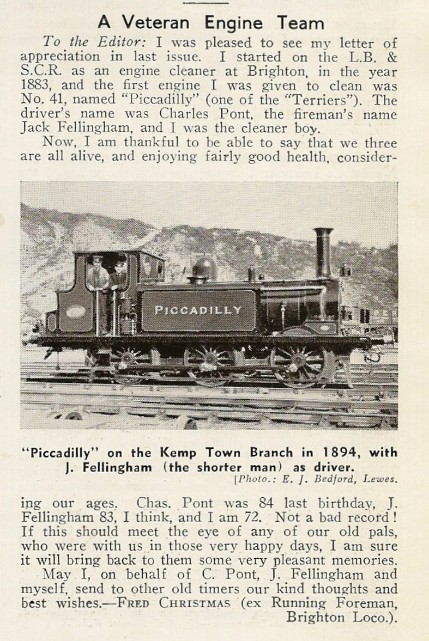
  Left ~ Right: Fireman Jack Fellingham & Driver Charles Pont.

Driver Jack Fellingham was bit of a celebrity among his workmates because of the long period which he had spent exclusively on the Kemp Town service. For about twenty years, first as a fireman and then as a driver, he had done nothing else, just thousands and thousands of trips from Brighton to Kemp Town and back. It might have been continued thus, but for an official edit which said, in effect, 

You can't earn a driver's top rate unless you do main line work'. 

In other words if Jack wanted to take his place among the men on top rate, he would have to broaden his horizons. It was a now or never situation and it caused some amusement among his colleagues. "He'll never do it!", they told each other, "He's never been anywhere but KempTown!"

Jack confounded them all by doing it and spent about six months  'learning the road' to London, Portsmouth, Hastings and many other routes that a top rate driver had to go.

Extracted from the book

Yesterday Once More

By Fred Rich


E.J. BEDFORD COLLECTION

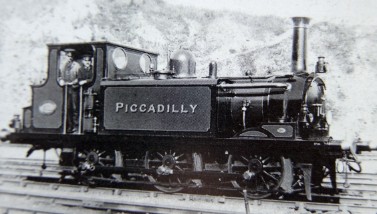
L~R: Fireman Jack Fellingham & Driver Charles Pont 


E.J. BEDFORD COLLECTION 

L~R: Fireman Jack Fellingham & Driver Charles Pont


Jack Fellingham was one of  four Fellinghams that at appeared 

According to the 1925 Southern Railway Seniority Book, there was four Fellinghams and their seniority dates are

Jack Fellingham started in May 1877, John Fellingham started at Brighton in 8th September 1903 

(John later transferred to Brighton's motorman's depot in 1936 where he remained until his retirement in 1950)

 Sid Fellingham started on 16th August 1909 & E. Fellingham started on the 1st February 1916


E.J. BEDFORD COLLECTION  

Photo was taken at Kemp Town some time after 1877 “Gypsy Hill"


POSTCARD


 STORIES FROM THE SHOVEL
extracted from RTCS book on locomotives of the LBSCR
On the 26th May, 1879, Driver Howells working engine No. 296 'Osborne' had a lucky escape when in charge of the 8.30 a.m. 
ex-Hayward Heath, which was formed of seven decrepit four-wheelers and a brake van. At the entrance to Brighton station 
No. 296 Osborne was travelling at 20 to 25 M.P.H., and could not be stopped before hitting the buffers, because Driver 
Howells had not discovered earlier that, although the engine carried the usual Westinghouse fittings, all the carriages were 
unbraked. Owning to the lightness of the train, the engine hand brake had been employed at all previous stations and it was 
only when attempting to make up a two minute loss by a smart platform stop at Brighton that disaster struck. Seventeen 
passengers complained of bruising, but no one was seriously injured on account of the train being so crowded that little space 
was available for individuals to be flung about.


CLICK ON THE ABOVE IMAGE TO TAKE YOU 

TO THE NEW UPDATED COMBINED AND WEBSITE


IGNITING THE FLAME OF UNITY WEBSITE


THIS WEBSITE COMBINES THE FOLLOWING WEBSITES 

THE BRIGHTON A.S.L.E.&F.,  THE BRIGHTON MOTIVE POWER DEPOTS 

& THE SUSSEX MOTIVE POWER WEBSITES


WHICH EXPLAINS THE EVOLUTION OF THE FOOTPLATE GRADES AND THE HISTORY OF THEIR TRADE UNIONS AND THE STRUGGLES TO IMPROVE THEIR WORKING LIVES

LOCOMOTIVE JOURNAL
MARCH 1888
Page 64
Battersea, London,
February 18th, 1888.
Dear Sir,—On Februcary 1 2th, 18S8, a meeting was held at The Two Brothers, Battersea, under the auspices of the A.S.L.E.
F. The room was comfortably filled, and a L.B. & S.C. driver was voted to the chair, and, after a few well chosen remarks, 
called upon the organising secretary, Mr. Ball, to explain the objects and benefits of the Society, under whose auspices the 
meeting had been called. Mr. Ball then said he was very pleased to see such a meeting as the one before him, and by the time he 
had done he hoped to be able to show what benefits could be derived by the combination of such a body as the enginemen and 
firemen of the United Kingdom. He also gave in detail the trial of Taylor and Davis, and as he told us of the great pains and 
trouble taken by the general secretary (Mr. Sunter), to see justice done to those members, it brought forth shouts of applause, 
and his zeal was highly appreciated by all present.
After Mr. Ball had done, five came forward and had their names enrolled, and several others promised to join at their earliest
convenience. Several questions were asked and satisfactorily answered by the organising secretary, and with a vote of
thanks to him, the chairman, and the representatives of the various London branches present, one of the most encouraging
meetings of enginemen and firemen was brought to a close.
I remain, yours truly, J. B. (John Bliss)


CLICK ON THE ABOVE IMAGE TO TAKE YOU 

TO THE NEW UPDATED COMBINED AND WEBSITE


IGNITING THE FLAME OF UNITY WEBSITE


THIS WEBSITE COMBINES THE FOLLOWING WEBSITES 

THE BRIGHTON A.S.L.E.&F.,  THE BRIGHTON MOTIVE POWER DEPOTS 

& THE SUSSEX MOTIVE POWER WEBSITES


WHICH EXPLAINS THE EVOLUTION OF THE FOOTPLATE GRADES AND THE HISTORY OF THEIR TRADE UNIONS AND THE STRUGGLES TO IMPROVE THEIR WORKING LIVES


STORIES FROM THE SHOVEL
extracted from RTCS book on locomotives of the LBSCR
THE OIL OFTEN & PLENTY BRIGADE
For some years Driver George Thomlinson (New Cross?) was assigned to a C1 Class engine No. 431, he was commonly 
known behind his back as 'Old Scourer' on account of his habit of burnishing bright such items as coupling rods, piping, 
safety valves, buffers, cab fittings, and above all the copper-capped chimney. He was also a prominent member of the ‘Oil 
often and plenty brigade', and regularly made rounds of No.431 when on the road. Leaving his Fireman at the controls, he 
used to take up a specially long-spouted can, and clamber precariously out of the right side of the cab to oil as necessary on 
that side of the engine, then pass round the smoke box attending the cylinder lubrication to regain the footplate via the left-
hand running plate.
On 17th September, 1889, while hauling a special goods from Hastings to Willow Walk, near Plumpton, 'Old Scourer' was 
topping up his oil can near the cab entrance, when a sudden and unexpectedly violent lurch sent him over board. The Fireman 
was busy breaking coal at the time and for some moments was quite unaware of the situation, and it was only when there was 
no retort to a witty remark that he guessed the truth. Whistling for an emergency stopped and applying the Westinghouse 
brake took only a few moment, but with a heavy train and a speed of 30 m.p.h. The train ran on for another 500 yards, before 
grinding to a halt. After a hasty conference with the bewildered guard it was agreed to back the trim slowly to the point of 
disappearance and their recover the body. However 'Old Scourer' was found very much alive, swearing loudly with both legs 
buried in a pile of sand, which had broken the falland probably saved his life. On being dug out , this tough character insisted 
in completing the journey and signed on to time following day.
A FOUL PRACTISE
The Battersea (?) footplate crew of a C1 Class engine No. 428, had a fine sense of humour, and after working a series of 
specials carrying live poultry from Brighton to the London area, they produced a frame text and hung it in the cab. This 
stated:- "Poultry - Attention is drawn to keeping hens on the engine. The eggs by such hens shall be deemed to belong to the 
crew, excepting those laid when on shed, when they shall be considered the property of the Foreman". On being asked by 
officialdom to remove it, the crew substituted a much smaller one, saying:- "Sand must not be taken from the sandboxes for 
use in the bird cages". The Shed Foreman was a well known canary fancier!!


STORIES FROM THE SHOVEL
extracted from RTCS book on locomotives of the LBSCR

LOST IN THE FOG
On the 4th February, 1882, in dense fog two, engines Nos. 212 ‘Hartlington’ and 211 ‘Beaconsfield’ were involved in what 
could have been a really serious affray. The former had left London Bridge with the 4.00 p.m. Brighton express and been 
followed by five minutes later by No. 211 at the head of the Hastings train. No. 212 had made its way at about 20 m.p.h. 
towards New Cross, when the fog suddenly thickened and speed was slackened to a walking pace, until just before Bricklayers 
Arms Junction. There no signals could be seen so speed was reduced even further with both men searched for the fogman. Just 
as he was found and shouted all was clear, 211 crashed gently into the rear, its speed having been fortuitously lowered by the 
guard applying his brakes when he failed to sight signals. Both trains stopped, and when it was discovered that the damage 
was negligible and no one injured, the guards decided to couple the trains together and proceed slowly to the New Cross box. 
On arrival, the fog had thinned out and each could be despatched separately down the main line.

On the 31st December, 1888, when no. 126 Gascony ran into the rear of the 7.00 p.m. to London Bridge to Hastings train in 
charge of no. 10 Banstead. It was foggy evening, and at Norwood junction the D1 driver was unable to read the signals, so 
stopped and sent his fireman to climb the post. At this moment Gascony, running light engine to west Croydon, after dropping 
the 5.10 p.m. Epsom to Norwood Junction goods, knocked the last carriage of the line. No one was injured and the inquiry 
found all concerned blameless.


PHOTOGRAPHER UNKNOWN


STORIES FROM THE SHOVEL
extracted from RTCS book on locomotives of the LBSCR

THERES NO SMOKE, WITHOUT FIRE
The firing of a Class 'E1s' engaged on local goods and yard shunting activities is referred to in a report of September 1883 in 
which the fireman Coote of engine no.108 jersey was accused of producing to producing excessive smoke while shunting at 
Brighton. The local bench fined fireman Coote £3 for ‘threatening a breach of peace by covering the back yards of nearby 
houses with soot on wash day.’
The company also took action because fireman Coote was found to be using seven hundredweight of coal per week more than 
necessary, and to have refused to heed his driver’s instructions. For this he was suspended for three days and reduced to 
cleaner. An inspector giving evidence stated that on shunting work engines of this type should only burn 15 hundred weight of 
coal per working day of nine hours, provided that the firebox was well filled with coal before shunting commenced, and then 
only fired sparingly to maintain sufficient steam for the task in hand.

 
BRIGHTON DRIVER HARRY AYLWYN

extracted from RTCS book on locomotives of the LBSCR

Brighton enginemen, Harry Aylwin was leaving Lewes on of the evening of 11thApril, 1884, with his loco no. 209 
‘Devonshire’, the reversing gear was jammed in full forward position and as the crew were unable to shut the regulator for 
several miles a signal was passed at danger was inadvertently passed. This was reported by the guard when, despite the 
circumstances and the fact that no lives were actually endangered, the driver was fined £4 and his fireman £2. No of appeal 
was granted, even after the reversing gear was found to be faulty on inspection at Brighton.
Harry Aylwin was severely reprimanded and fined again in May, 1884 for not reporting a mishap on Eastbourne shed. He had 
moved his engine (No. 209 ‘Devonshire’)slowly towards the turntable after dark in pouring rain and failed to notice that it 
was set for the adjacent road. The front of his engine toppled gently into the pit and came to rest at an acute angle with much 
of the water running clear of the firebox. There was no alternative but to throw out the fired, and when this was accomplished 
Harry walked over to the foreman’s office and requested a spare engine because his was not steaming well. The foreman asked 
for more information, whereupon he was told in terms usually reserved for the very young or slow-witted – “Look, Mr. Jones, 
no engine steam without fire and mine has lost its”. The foreman was not amused, and in due course the witticism cost him 
another £3, together with a warning as to his future behavior.
---------

On the 11th March, 1887 when engine No.312 “Albion” was standing under the coal tips on Battersea shed at 10.40 p.m. it 
had just worked an empty troop special up from Portsmouth and was being coaled in preparation for an early morning cattle 
train to Lewes when it run into by seven ash wagons propelled by “D- Tank” No.351 ‘Chailey’ and crushed against a Craven 
goods. At the time the driver was oiling the motion, but by some lucky chance was flung clear and escaped injury, while the 
fireman who was having his supper in the rest room and therefore out of harm’s way, fell in his hurry to reach the scene and 
broke is collar bone.

On 10th August, 1887 Belgravia Class, No 205 'Kensington' was in charge of the 3.22 p.m. Victoria to Hastings express, when 
Fireman William Ellis joined the train surreptitiously while passing over Grosvenor Bridge. This was on his way home, and as 
Clapham Junction was reached he stopped the train by using the electric communication bell. Jumping clear as the speed fell 
he would have identification if it had not been for the dog which always accompanied Driver Morgan on'Kensington's’ 
footplate. Sent after the stowaway, he caught Ellis near the line side fence and held him until the police arrived.


On 4th May, 1890 Belgravia Class, No 206 'Carisbrooke' was working an early morning train to Brighton. The Driver Henry 
Santer, bore a long-standing grudge against the Station master, and when the train stopped alongside the down platform he 
slipped across the track to the up side, where several crates of chickens were stacked. Taking one, he entered the first class 
waiting room and released them, then closing the door he ran for his engine. Unfortunately he slipped on the wet sleepers and 
broke his collar bone, which brought his movements to the notice of the station staff. When an annoyed traveller complained 
of having an overcrowded waiting room, the culprit was quickly discovered. Driver Santer was reduced to Fireman, and some 
months later dismissed the company's service after throwing his coal shovel overboard in a fit if temper following words with 
his driver. On this occasion his engine was a Class D1 No. 271 ‘Eridge'


PHOTOGRAPHER UNKNOWN

 Driver Henry Lewry & Fireman William Sands

Bill Sands retired in 1932


TO THE ENGINEMEN AND FIREMEN OF
THE UNITED KINGDOM
Fellow "Workmen"
The Associated Society of Locomotive Engineers AND Firemen was formed eight years ago, and is making rapid strides. It 
disorganised condition. Experience has proved that we could have our grievances redressed if we were a thoroughly 
organised body, and thereby raise ourselves to that position to which our responsible duties entitle us. We know that men have 
striven for years to improve their position by appealing to superintendents and directors, with results that are but too well 
known, and we have only to instance the Midland dispute to illustrate our meaning. But how different might those results have 
been had all Enginemen and Firemen been bound in one common brotherhood, for not only is it necessary that we should 
prepare for sickness, old age, and death, but that we should also be afforded protection in our labour ; for so great and 
arduous are the duties to which Enginemen and Firemen are called upon to perform, and their responsibilities so great, that 
the most careful men are liable to accidents, which may result in their being indicted for manslaughter. Why, then, should you 
pay away your hard-earned savings in obtaining legal defence, when you may belong to a Society which will provide you with 
legal assistance, in addition to other trade protection benefits, for the sum of fourpence per week ? Surely the result of the 
Hexthorpe trial, in which the driver and fireman (both members of our Society) were implicated, ought to be an inducement to 
Enginemen and Firemen to join our Society, for we believe that had it not been for the valuable assistance rendered them by 
our Association, which is composed of Enginemen and Firemen only, whose interests and sympathies were identical with the 
accused, it would have been more difficult to have established the men's innocence, but owing to the practical experience of 
the officers of our Association, they were enabled to point out the imperfections of the system under which the men were 
We hope you will, therefore, recognize in our Society a long-felt want supplied, and come and join us. Our Schedule of 
Contributions and Benefits will be found on the second page of cover of this publication.
T. G. SUNTER, 
General Secretary.
1888 
was established in order to give greater security to our labour, and to prevent our employers from taking advantage of our 
working, which could not have been so lucidly explained by men unacquainted with the calling of Enginemen and Firemen. 


CLICK ON THE ABOVE IMAGE TO TAKE YOU 

TO THE NEW UPDATED COMBINED AND WEBSITE


IGNITING THE FLAME OF UNITY WEBSITE


THIS WEBSITE COMBINES THE FOLLOWING WEBSITES 

THE BRIGHTON A.S.L.E.&F.,  THE BRIGHTON MOTIVE POWER DEPOTS 

& THE SUSSEX MOTIVE POWER WEBSITES


WHICH EXPLAINS THE EVOLUTION OF THE FOOTPLATE GRADES AND THE HISTORY OF THEIR TRADE UNIONS AND THE STRUGGLES TO IMPROVE THEIR WORKING LIVES


STORIES FROM THE SHOVEL
extracted from RTCS book on locomotives of the LBSCR

SALT OF THE EARTH!!
On the evening of 23rdJanuary, 1892 engine No. 304 “Nice” ,whilst working a short goods train from Lewes to Brighton. Next 
to the guard’s van was a large six wheeled salt wagon on which the centre axle suddenly fractured, but instead of derailing the 
wagon the broken parts miraculously cleared themselves and the train ran on apparently unharmed. However the driver 
suddenly noticed frantic lamp signals from the guard, so he stopped his engine and awaited the guard who reported the van 
was damaged and had no brakes. Inspection of the train failed to reveal the cause until on starting away slowly the trouble 
came to light, for salt began to pour out of the punctured wagon bottom. In daylight a careful search was made of the track 
and surrounding fields, and in due course part of the axle and one wheel was found 240 yards from the point of the breakage, 
but its companion was never discovered.

STORIES FROM THE SHOVEL
extracted from RTCS book on locomotives of the LBSCR


RUNNING AMOK
The L.B.S.C.R. company was extremely fortunate on the 14th April, 1889, when no. 139 Lombardy ran amok from New Cross 
to South Croydon following a collision with engine No. 224 Crowhurst. The latter was heading the 9.20 a.m. London Bridge-
Victoria into New Cross station, when Lombardy was seen passing from the down main line, across the local line to the goods 
sidings. Seeing collision could not be averted, the crew jumped clear after reversing the engine, which somehow remained on 
the track despite the severity of the blow dealt by Crowhurst, and ran on its own down the main line. By a combination of skill 
and luck the 8 ½ miles to south Croydon were covered without mishap, where signal man Philpott partly opened a pair of 
facing points and brought Lombardy to a stand on the ballast. At the subsequent inquiry no blame was placed on the men 
concerned for on inspection the signaling equipment was found to have suffered at the hands of a local scrap merchant who 
had removed wiring, chains and other parts vital to its efficient working.


PHOTOGRAPHER UNKNOWN

THE BRIGHTON BRANCH OF A.S.L.E.&F. WEBSITE.


 HAS NOW BEEN MOVED TO A NEW SITE CALLED


IGNITING THE FLAMING OF UNITY


https://ignitingtheflameofunity.yolasite.com/


PLEASE CLICK ON THE IMAGE BELOW 

TO TRANSFER TO THIS NEW SITE


CLICK ON THE ABOVE IMAGE TO TAKE YOU 

TO THE NEW UPDATED COMBINED AND WEBSITE


IGNITING THE FLAME OF UNITY WEBSITE


https://ignitingtheflameofunity.yolasite.com/


THIS WEBSITE COMBINES THE FOLLOWING WEBSITES 

THE BRIGHTON A.S.L.E.&F.,  THE BRIGHTON MOTIVE POWER DEPOTS 

& THE SUSSEX MOTIVE POWER WEBSITES


WHICH EXPLAINS THE EVOLUTION OF THE FOOTPLATE GRADES AND THE 

HISTORY OF THEIR TRADE UNIONS AND THE STRUGGLES TO IMPROVE 

THEIR WORKING LIVES 


Make a free website with Yola